

When Premium Categories Reach Scale
What the rapid expansion of the matcha market reveals about the industrialisation of premium food categories
For most consumer products, growth is analysed through the behaviour of consumers. Analysts measure market penetration, retailers monitor purchasing patterns and brands invest heavily in understanding how preferences evolve over time. Product success is therefore generally interpreted as the outcome of demand.
This perspective is both intuitive and incomplete.
Consumer demand explains why categories emerge. It explains far less convincingly why certain categories become permanent components of industrial supply chains while others disappear despite periods of strong commercial momentum. Between the moment a product becomes fashionable and the moment it becomes structurally embedded within an industry, the nature of competition changes fundamentally.
The recent evolution of the matcha market illustrates this transition with unusual clarity.
During June and July 2025, matcha beverages sold through UK cafés more than doubled compared with the previous year, representing approximately 4 per cent of all beverages sold through Square’s network. More than 1.6 million drinks were served within only 2 months, generating over £7 million in sales[1]. At the same time, GlobalData estimated that the number of UK cafés serving matcha had tripled within 12 months to more than 1000 locations, while the average selling price remained close to £4.50 per drink[1].
Consumer adoption accelerated rapidly, but demand alone does not explain the decisions subsequently taken by the industry’s largest operators.
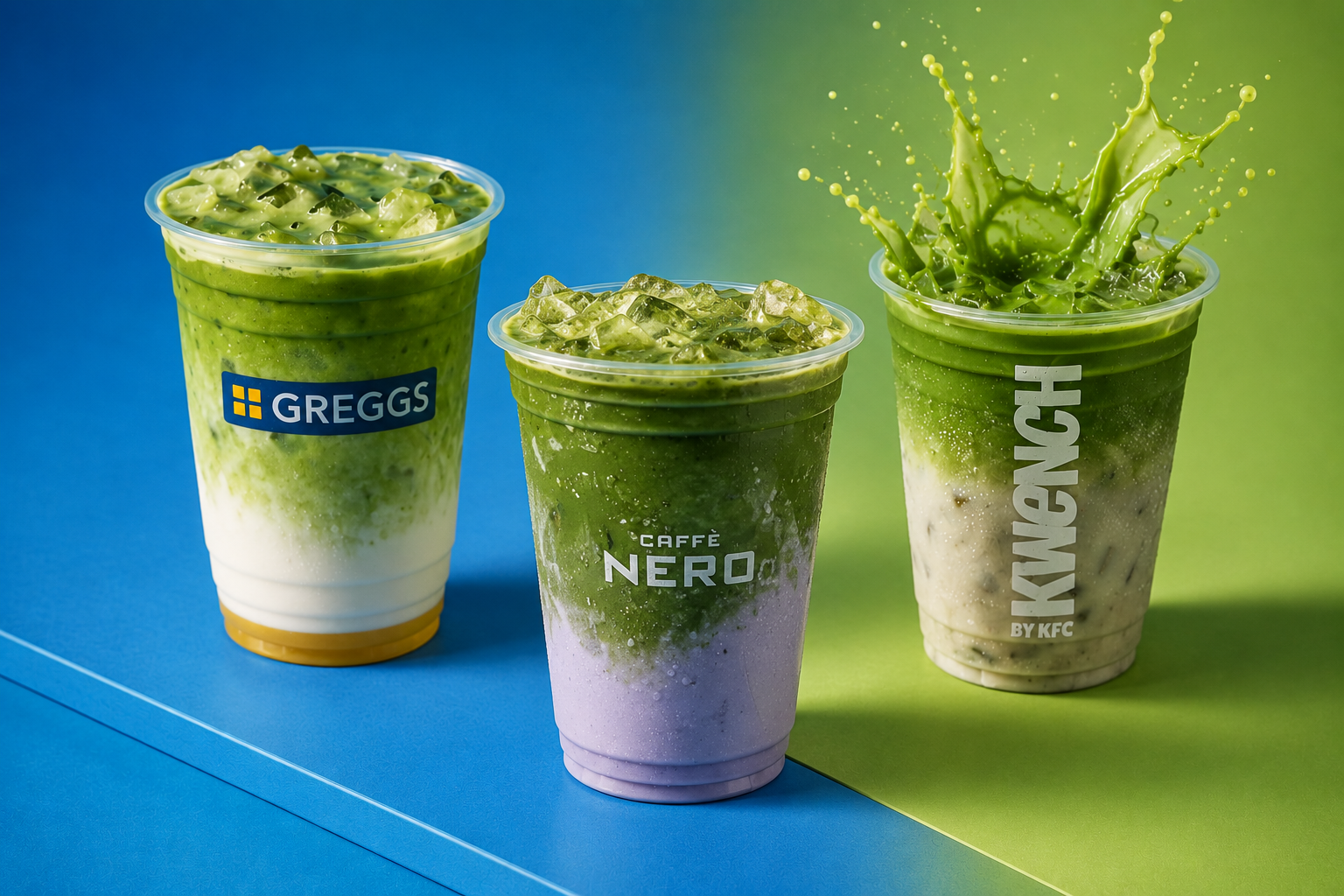
Over the last 12 months, Caffè Nero, Greggs and KFC each integrated matcha into their long-term beverage strategies.
Caffè Nero reported that matcha accounted for approximately 85 per cent of the growth in its iced drinks category, contributing to 50 per cent growth in iced beverage sales and 5 per cent like-for-like sales growth in the UK[2]. Greggs identified iced matcha lattes as one of the standout successes of its menu innovation strategy, designed to attract new and younger customers while reporting a 20 per cent increase in first-half pre-tax profit and sales exceeding £1.1 billion[3]. KFC has likewise elevated matcha from a seasonal trial to a permanent menu platform, extending its Kwench beverage range nationwide with ceremonial-grade matcha drinks as part of one of its largest menu launches of the year, although the company has not disclosed category-level performance metrics[4].
The significance of those announcements, however, lies less in the products themselves than in what they reveal about the behaviour of management teams.
These businesses compete in different market segments, operate under different pricing architectures and serve fundamentally different consumer occasions. Their simultaneous commitment to the same premium ingredient therefore appears unlikely to reflect imitation alone. Instead, it suggests that independent management teams reached similar conclusions regarding the long-term economics of the category.
This distinction deserves a closer examination.
Restaurant operators introduce hundreds of products every year. The overwhelming majority remain temporary menu items. Limited-time offers provide an efficient mechanism for testing consumer demand, generating publicity or reinforcing seasonal campaigns before disappearing from the portfolio. Permanent menu integration represents a materially different decision. It commits procurement resources, supplier qualification, operational procedures, pricing assumptions, marketing investment and forecasting over multiple years. Such commitments are rarely justified by consumer enthusiasm alone.
The strategic question therefore extends beyond matcha: Why do some premium ingredients evolve into permanent categories while others remain successful trends that ultimately fail to industrialise?
Functional nutrition, premium positioning and social media visibility have undoubtedly accelerated matcha’s expansion. WGSN estimates that matcha-related content generated more than 426 million TikTok views during April 2025 alone, representing a 53 per cent increase compared with the beginning of the year[5] .Online conversations have simultaneously expanded beyond innovators into early-majority and mainstream consumer groups, suggesting that adoption is becoming increasingly broad-based[5].
These developments explain why consumers became interested but they do not fully explain why restaurant operators committed capital. Indeed, for management teams, consumer demand represents only one element of the investment decision. The second concerns commercial economics.
However, one characteristic distinguishes matcha from many mature beverage categories: consumers possess a limited knowledge of its underlying cost structure.
Unlike coffee, where decades of consumption have established relatively stable expectations around quality and pricing, matcha remains a category with weak reference pricing. Few consumers understand the difference between ceremonial and culinary grades, estimate ingredient costs or appreciate the complexity of production. Purchasing decisions are instead shaped by signals of value: Japanese provenance, traditional preparation, health positioning, visual presentation and social endorsement.

A high willingness to pay, combined with low price elasticity, creates a pricing window that allows operators to improve margins and increase average revenue per transaction before the market establishes a reference price.
Behavioural economics helps explain why these commercial conditions can persist.
Consumers rarely evaluate unfamiliar categories according to objective production costs. Instead, they rely on relative comparisons and perceived value when judging whether a purchase represents good value[6][7]. A £4.80 matcha latte is therefore evaluated against other premium beverages offered by the same operator rather than against the cost of the agricultural ingredient itself.
For restaurant operators, these conditions create unusually attractive unit economics.
Premium pricing can be sustained despite relatively weak consumer price anchors. Existing beverage equipment, operational processes and labour models generally require little adaptation. The result is a category capable of increasing average transaction value without fundamentally altering the operating model.
This commercial logic is consistent with a broader shift observed across foodservice.
Recent McKinsey research argues that Revenue Growth Management has become one of the industry’s most effective levers for improving profitability without relying exclusively on network expansion[8]. Rather than focusing solely on attracting additional customers, operators increasingly optimise pricing architecture, menu mix and purchasing behaviour to improve revenue generated by existing locations.

System-wide sales can be simplified into two primary growth levers: expanding the store network or increasing revenue generated by each location. As restaurant chains mature, the pace of net store expansion becomes progressively more predictable and capital intensive. Incremental value creation therefore increasingly depends on improving revenue per store, making menu innovation a strategic lever rather than simply a product decision.
Premium beverages fit particularly well within this approach.
For Caffè Nero, matcha strengthened an already profitable drinks category[2]. For Greggs, it contributed to expanding higher-value beverage occasions, recruiting new customers and improving seasonal footfall[3]. For KFC, it diversified consumer purchasing occasions beyond traditional meal occasions[4]. Although the commercial context differed, the economic mechanism remained remarkably similar.
Commercial success changes the nature of the constraint. During the early stages of category development, management attention is primarily directed towards stimulating consumer demand and validating commercial acceptance.
As distribution expands across national restaurant networks, however, the principal challenge progressively shifts towards industrial execution. Procurement decisions become increasingly dependent on sustainable sourcing and suppliers’ production capacity, specification consistency and long-term price visibility, transforming what initially appeared to be a consumer trend into a supply-chain challenge.
The discussion so far has focused on 2 conditions that appear necessary for a premium category to scale. The first is sustained consumer demand. The second is commercial attractiveness for operators. Neither, however, guarantees that a category can become a durable component of the food industry.
A third condition is required: Demand must be capable of being translated into industrial supply.
This distinction is often overlooked because consumer markets evolve much faster than agricultural and manufacturing systems. A restaurant chain can introduce a new beverage nationally within a matter of months. Expanding agricultural production, processing capacity and industrial packaging frequently requires several years. The economic bottleneck therefore shifts from stimulating demand to expanding productive capacity.
The recent evolution of the matcha market illustrates this transition.
Japanese exports of powdered green tea increased by 75 per cent during 2024, reaching ¥27 billion, almost three times their 2019 value[9]. During the first 7 months of 2025 alone, export values had already approached twice those recorded during the whole of 2020[9]. At the same time, prices for Uji tencha leaves used in matcha production tripled year-on-year to ¥14,141 per kilogram, processing equipment manufacturers reported order books extending approximately 2 years into the future and new plantations continued to require around 5 years before reaching commercial harvest[9]. Additionally, the average age of a tea farmer in Japan is approximately 69 years old, reflecting a broader national agricultural labor shortage issue.
Taken independently, these observations describe an industry experiencing rapid growth but taken together, they describe a more complex challenge. Demand has begun expanding faster than the traditional production system can respond.
That distinction has strategic consequences.
Procurement decisions made by restaurant operators purchasing a few kilograms each month differ fundamentally from those made by organisations sourcing hundreds of tonnes annually. At industrial scale, quality remains important, but it is no longer the only variable. Annual production capacity, specification consistency, regulatory compliance, logistics, inventory resilience and long-term price visibility become equally important determinants of commercial performance.
The economics of procurement therefore evolve alongside the category itself and lead to a broader proposition.
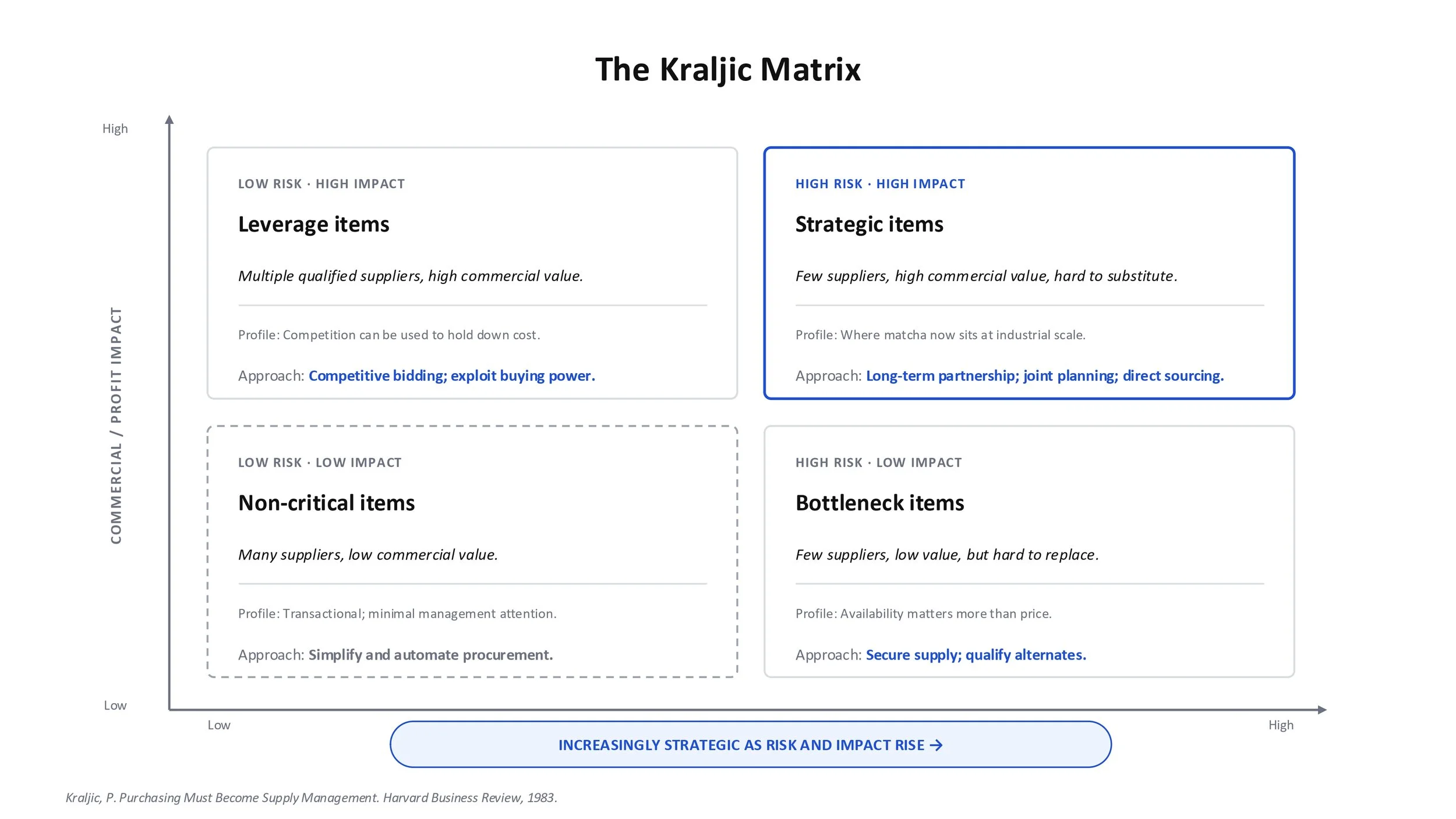
Existing strategy literature explains many elements of category development independently. Behavioural economics explains how consumers establish value perceptions and reference prices[6][7]. McKinsey’s work on Revenue Growth Management explains how operators improve profitability through pricing architecture and product mix rather than network expansion[8]. Kraljic’s seminal work on procurement strategy demonstrated that purchasing becomes increasingly strategic as supply risk and commercial impact increase[10]. Porter showed that competitive advantage ultimately depends on the configuration of the value chain rather than isolated functional excellence[11].
What remains less explored is the interaction between these mechanisms:
Consumer economics. The category must create sustained demand supported by premium perception rather than temporary novelty.
Commercial economics. The category must improve unit economics for operators by increasing revenue per transaction without introducing disproportionate operational complexity.
Industrial economics. Production systems must be capable of delivering consistent quality, sufficient capacity and predictable procurement conditions as demand expands nationally.
Only when these three conditions coexist does a premium category transition from a successful product into an investable industrial category.
This interaction is summarised in the Premium Category Investability Framework.
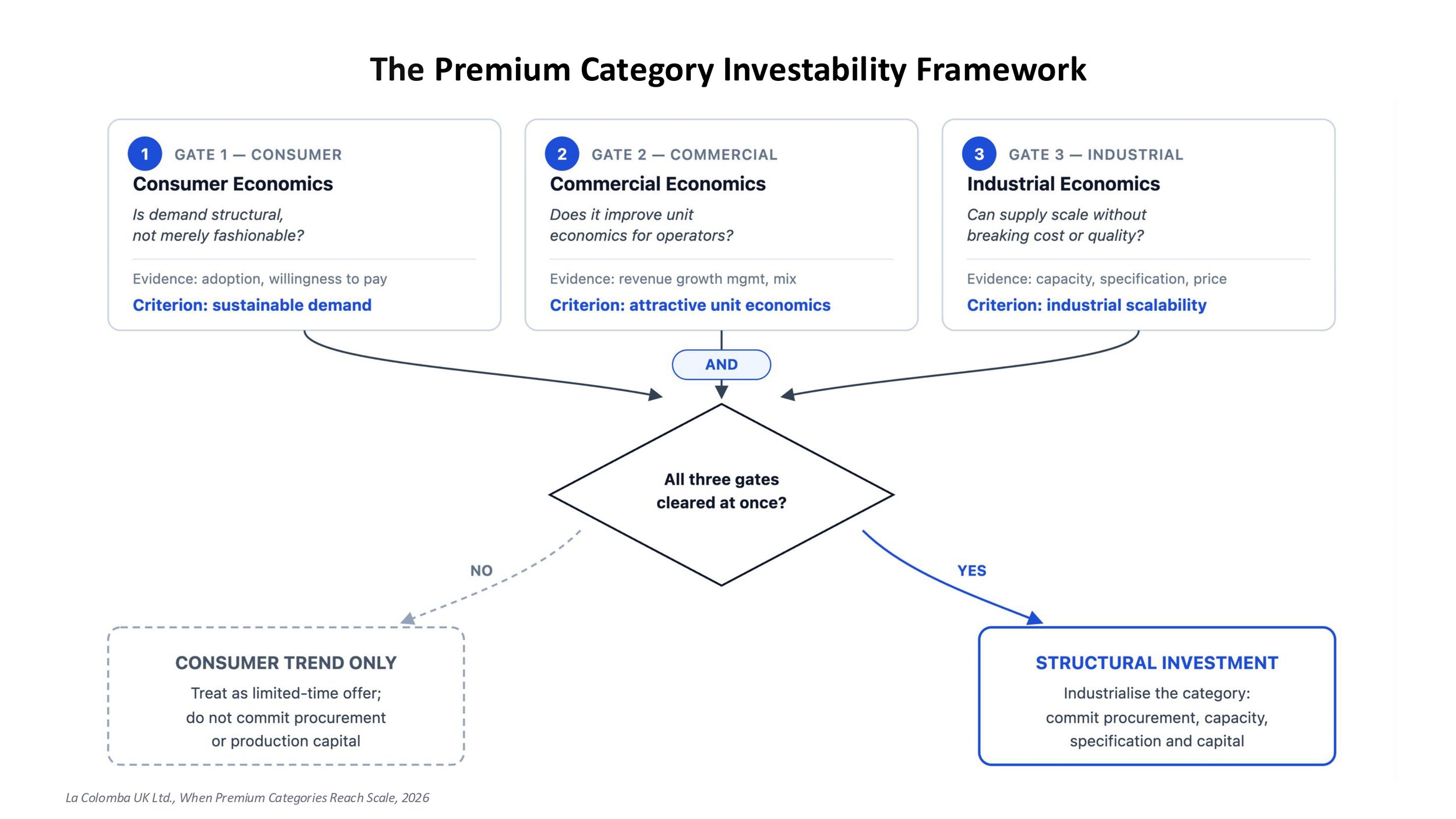
The framework is not purely theoretical. It also changes how sourcing decisions should be interpreted once a category reaches industrial scale. This helps explain why Japan and China should not be viewed as competing narratives when it comes to matcha sourcing. Most discussions on press articles present the 2 countries as alternative origins while actually industrial economics suggests a different interpretation.
From Country of Origin to Supply Chain Architecture
Japan occupies the premium end of the value chain, where heritage, terroir and production expertise justify higher prices and support the ceremonial segment. Industrial foodservice operates under different constraints. National restaurant chains purchasing annual tonnage require additional productive capacity capable of delivering consistent specifications, stable pricing and sufficient scale. Under these conditions, expanding Chinese production does not replace Japanese production; it expands the productive capacity of the category itself.
Indeed, unlike the fragmented structure of Japanese production, a few leading Chinese producers have adopted a vertically integrated model, controlling the value chain from tea cultivation to final milling. This enables annual production volumes exceeding 5,000 tonnes while maintaining consistent quality specifications, year-round supply and predictable production costs. As a result, these producers are increasingly positioned to address the operational requirements of industrial-scale foodservice and manufacturing applications, complementing rather than competing with Japan’s premium ceremonial offering.
This distinction matters because the principal commercial risk facing large buyers is rarely purchase price alone but uncertainty.
An inconsistent specification weakens customer experience. Supply interruptions reduce menu availability. Volatile purchasing costs complicate pricing decisions. Limited production capacity restricts commercial expansion. These indirect costs frequently exceed the apparent savings achieved through short-term purchasing decisions.
The competitive advantage of the next decade is therefore unlikely to be determined solely by branding or product innovation. It will increasingly depend on the ability to transform consumer demand into resilient industrial systems.
The implications extend well beyond matcha.
Specialty coffee, premium cocoa, vanilla, pistachios and functional ingredients have each followed comparable trajectories. Consumer enthusiasm created the initial market. Long-term value was ultimately captured by organisations capable of building resilient sourcing strategies, industrial manufacturing capability and integrated supply chains around that demand.
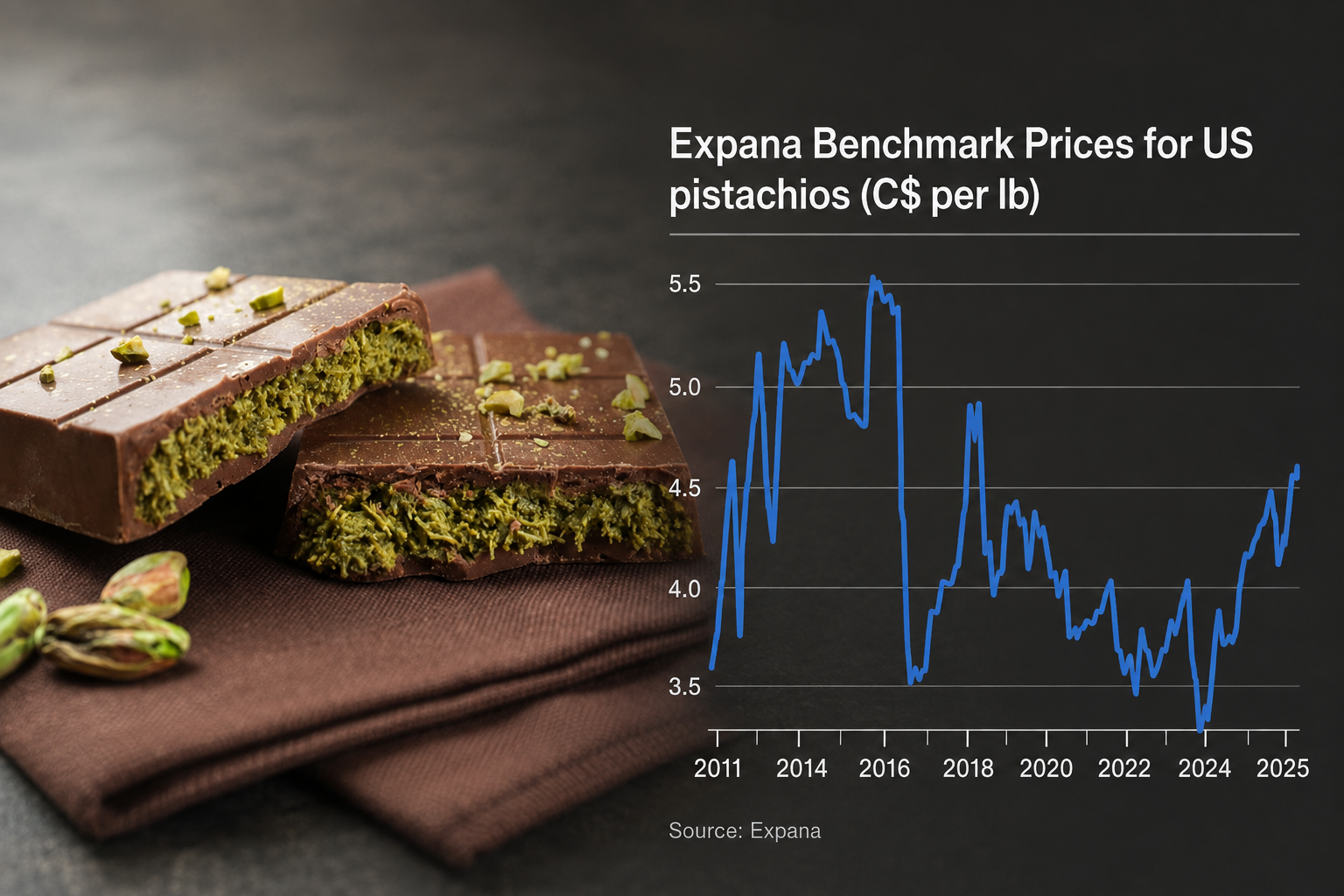
Matcha is unlikely to be unique. Similar industrial dynamics are already emerging across other premium ingredients. Global pistachio prices reached their highest level since 2018 as the Dubai chocolate trend fuelled global demand, while poor harvests and geopolitical tensions further tightened supply.
Executives therefore face a different strategic question from the one most commonly asked — such as “is matcha a trend?”.
The objective is not simply to identify the next premium ingredient capable of attracting consumer attention, but to recognise when an emerging category satisfies the conditions necessary to become structurally investable. Premium categories become permanent not because consumers embrace them alone, but because consumer demand, commercial economics and industrial capability converge to support sustainable growth at scale.
This conclusion extends well beyond matcha. Across premium food categories, long-term competitive advantage increasingly depends on an organisation’s ability to translate consumer demand into resilient industrial systems capable of delivering consistent quality, scalable production and predictable procurement conditions. As production constraints become more significant, they also create opportunities for innovation, whether through advances in agricultural production, manufacturing technologies or alternative production models capable of expanding productive capacity.
Markets are often remembered for the brands that first popularised a category. They are more frequently dominated by the organisations that first understood how to industrialise it.
Jonas García, jonas.garcia@lacolomba.co.uk
References
[1] Financial Times. Going Green: Matcha Mania Takes Hold in UK Cafés. 21 September 2025.
[2] Caffè Nero Group. Interim Results 2025; The Grocer coverage of UK trading performance.
[3] Greggs plc. Interim Results 2026; BBC News business coverage.
[4] Retail Times. KFC launches ceremonial-grade matcha across the Kwench platform. 2026.
[5] WGSN TrendCurve. Matcha Drinks Reports (2025–2026).
[6] Kahneman, D. & Tversky, A. Prospect Theory: An Analysis of Decision under Risk. Econometrica (1979).
[7] Thaler, R. Mental Accounting and Consumer Choice; Journal of Behavioral Decision Making.
[8] McKinsey & Company. What’s on the Menu? Revenue Growth Techniques for Restaurants.
[9] Financial Times. Japan Buckles Under Matcha Mania. 10 October 2025.
[10] Kraljic, P. Purchasing Must Become Supply Management. Harvard Business Review, 1983.
[11] Porter, M. Competitive Advantage: Creating and Sustaining Superior Performance. Free Press, 1985.